The number of options that come up when you search for a school for medical assistant training can be overwhelming. Community colleges, trade schools, online platforms, hybrid programs — they all claim to prepare you for the career. But the gap between the best and worst programs is enormous, and choosing the wrong one costs you time, money, and momentum.
Here’s how to evaluate your options, what the strongest programs have in common, and what should send you looking elsewhere.
What separates a great MA school from an average one
1. Hands-on clinical training in real healthcare settings
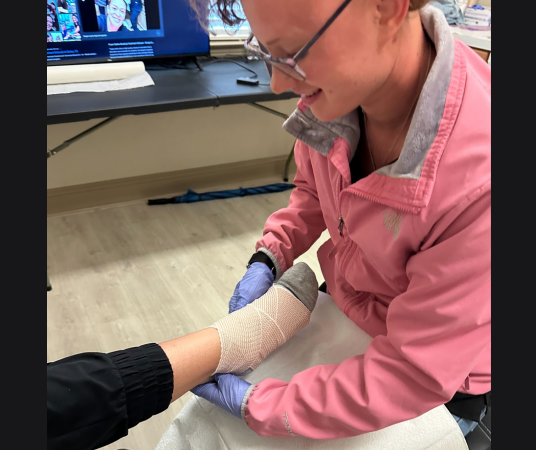
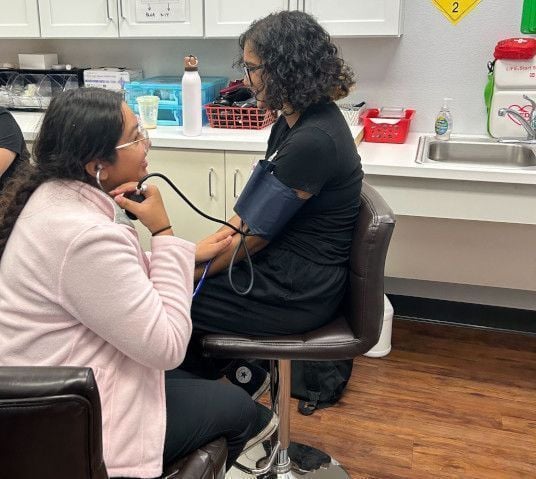
This is the single most important factor. Medical assisting is a clinical career — you’ll draw blood, take vitals, administer injections, perform EKGs, and assist physicians during exams. Those skills can’t be learned from a textbook or a video lecture alone.
The best schools train you in environments that mirror (or are) actual medical offices and clinics. Knoxville Medical Assistant School trains students using real clinical equipment and supervised practice so you graduate confident, not just certified.
2. Certification exam preparation
The Certified Clinical Medical Assistant (CCMA) credential through the National Healthcareer Association — or an equivalent national certification — tells employers your skills have been independently verified. Schools that integrate exam prep throughout the program (rather than tacking it on at the end) produce students who pass at higher rates.
3. A focused, efficient curriculum
A good school for medical assistant training doesn’t pad the program with general education courses that have nothing to do with the job. Every module should connect directly to skills you’ll use in a medical office:
- Clinical skills: phlebotomy, vitals, injections, EKGs, specimen collection
- Administrative skills: scheduling, insurance verification, EHR documentation, billing codes
- Patient communication: intake interviews, explaining procedures, managing anxiety
- Medical terminology and anatomy: the foundation everything else builds on
4. Affordable, transparent pricing
You should know the all-in cost before you enroll — tuition, materials, lab fees, certification exam fees, everything. No surprises, no hidden charges that appear after you’ve committed.
5. Career support after graduation
Resume help, interview coaching, job search guidance, and employer connections should be part of the package. The best schools don’t just train you — they help you find work.
Red flags that signal a weak program
- No clinical practice — if everything is online or lecture-only, you won’t be prepared
- Hidden fees — a program that advertises low tuition but charges thousands more in extras isn’t being transparent
- No certification pathway — without CCMA or equivalent exam prep, your credential won’t carry the weight employers expect
- Pressure to enroll immediately — reputable schools give you time to ask questions
- Vague outcomes — if they can’t clearly explain what you’ll learn and where your clinical training happens, keep looking
Types of medical assistant schools compared
Accelerated certificate programs
- Length: Typically 12–18 weeks
- Best for: Career changers, working adults, anyone who wants to start earning quickly
- Strengths: Fast, focused, affordable, job-essential skills only
Diploma programs
- Length: 6–12 months
- Best for: Students who want more extended training
- Strengths: More comprehensive, often includes longer externships
Associate’s degree programs
- Length: 1–2 years
- Best for: Students who want an academic degree
What medical assistants earn
For a career that requires weeks of training — not years — the return on investment is strong.
The job market in Knoxville
- Medical offices, clinics, urgent care centers, and hospitals near Knoxville are consistently hiring
- An aging population needing more healthcare services continues to drive demand
- Certified assistants with clinical experience are who employers are actively looking for
Questions to ask any school for medical assistant training
- Where does hands-on clinical training take place?
- How long is the program, and what’s the weekly schedule?
- What is the total cost — everything included?
- Does the program prepare me for CCMA certification?
- What payment plans are available?
- What career support do you offer after graduation?
- Do I need prerequisites or prior healthcare experience?
- Can I work while enrolled?
Who becomes a medical assistant?
The career attracts a wide range of people:
- Career changers from retail, food service, office work, or other industries looking for something more meaningful and stable
- Recent high school graduates who want a healthcare career without committing to four years of college
- Parents returning to the workforce who need a career with predictable hours and growth potential
- People interested in nursing or other healthcare roles who want to start working in the field while deciding their long-term path
- Military veterans transitioning to civilian healthcare careers
No prior healthcare experience is needed. Programs are designed for complete beginners.
What to expect on your first day
Starting something new — especially in healthcare — can feel intimidating. Here’s what makes it manageable:
- You begin with foundational concepts: medical terminology, anatomy basics, and infection control theory
- Instructors understand most students are beginners and design the early curriculum accordingly
- You’ll meet classmates in the same position — people exploring healthcare for the first time
- The environment is supportive, not competitive
By the end of the first week, the unfamiliarity fades and the path forward becomes clear.
The role of accreditation and certification
When evaluating a school for medical assistant training, certification outcomes matter more than program length. The key credential to look for:
CCMA — Certified Clinical Medical Assistant (National Healthcareer Association)
- Recognized by employers nationwide
- Tests clinical knowledge and skills across all core competency areas
- Required by many medical offices, not just preferred
Schools that treat certification prep as an afterthought produce graduates who struggle on the exam. Programs that integrate CCMA content throughout the curriculum produce graduates who test confidently and earn more from day one.
Career advancement from your first position
Your first MA job is just the start:
- Clinical coordinator — patient flow, quality metrics, staff scheduling
- Office management — transitioning into full practice administration
- Further education — MA experience is a recognized foundation for nursing, PA programs, and healthcare administration
The career has upward mobility. Where you start isn’t where you have to stay.
A realistic look at your first 90 days working
Here’s what most new medical assistants describe from their first three months on the job:
Month 1 — Learning the specific workflows of your office. Every practice is a little different. You’re applying your training while adapting to the team, the EHR system, and the pace.
Month 2 — The repetition kicks in. Vitals become automatic. Patient communication feels natural. You’re contributing meaningfully and earning trust from providers.
Month 3 — You’re fully operational. Drawing blood without hesitation, managing your assigned rooms independently, handling administrative tasks without being asked. Most MAs report feeling genuinely competent by the end of month three.
That transition from student to confident professional happens fast when your training was thorough. It’s the direct payoff of learning in a hands-on, clinically focused program.
See what Knoxville Medical Assistant School offers
Hands-on clinical training, certification preparation, and a program designed to get you job-ready — without years of school or unnecessary debt.